

How I Manifested Disaster For the Best Book I've Ever Written
And the thoughts that sank it

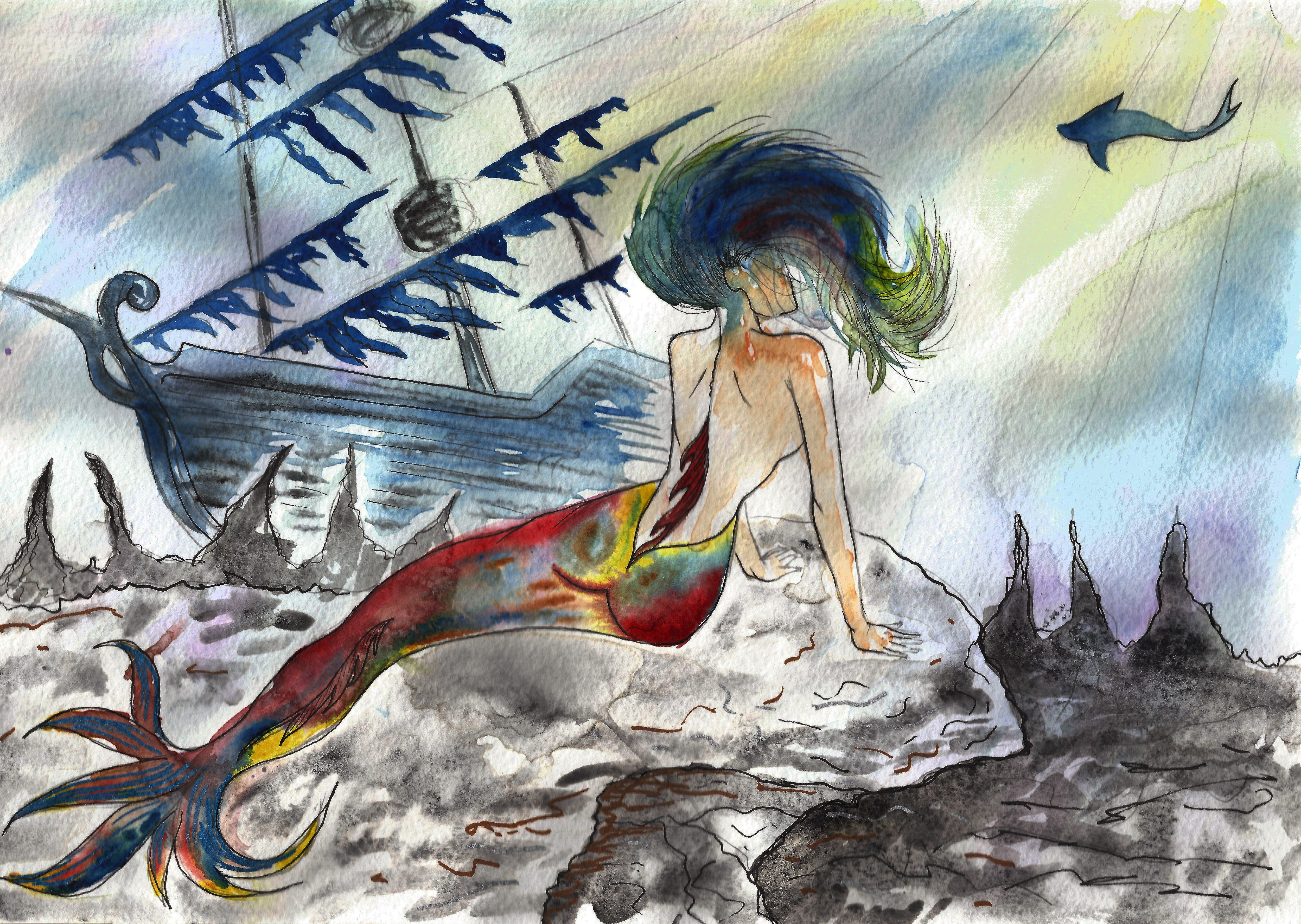
D[isaster]-Day
It’s October 2022. The headache is a tight metal band around my skull, tightened on a ratchet. A three-day headache that isn’t abating. My throat is raw as a grazed knee. The best place for me is bed, so that’s where I am when it comes: the message leading to the news that will, for the next few months, destroy me.
Have you seen this article in The Bookseller? It sounds like your book.
There’s a link. Before I’ve even clicked it, I feel sick.
There are no good ways for a friend to rip your heart out. But she had to tell me. She had been there from the book’s inception nearly a decade earlier. She was the reason it existed at all. Every time we’d met for a drink in the intervening years, she’d asked how it was going. Now, with 88 of its planned 92 chapters completed, she was letting me know that its life was hanging in the balance.
A Voice Out of Nowhere
January 2013. I’m off to York for my birthday weekend. We are pulling out of the garage when my phone goes. It’s my friend (and former mentee) Patience Agbabi. Her son has caught a bug, and suddenly, she can’t teach the Arvon workshop she’s due to deliver, starting Monday. In Yorkshire. Can I do it?
What a birthday present! It’s at Lumb Bank, an 18th-century former millhouse once owned by Ted Hughes. I met him as a teenage poet, and he recommended me for an Arvon course; I attended Totleigh Barton in Devon, aged 15, half as young as the next youngest person. To teach for Arvon at his former home is my dream. This is the year in which the universe will shower me with gifts (after some serious manifestation work); in a few months, I will be winning literary prizes and walking on literal red carpets.
“Stop the car!” I say. We are only 50 yards up the road. I run back into the house, pack my favourite writing exercises and extra clothes, grab a few copies of my books, and we’re off! On Sunday night, Paul drives me an hour across snowy hills and drops me at the tutors’ cottage.
It proves to be a memorable and dramatic week. One of the participants doesn’t take his meds, and some drama explodes that brings the rest of us close. But for the purpose of this story, only one thing matters: a book is born. The other tutor, Chris Wakling, and I take part in each other’s workshops. And in his character creation exercise (which I have since adopted), a voice starts talking to me. A young working-class girl from the 18th century.
Since I’m an author, this isn’t a case of upping my meds (I am only on thyroxine) or calling an exorcist. This 18th-century girl isn’t wafting through the 18th-century millhouse in a high-necked nightdress, prickling the hairs on our necks and bemoaning her fate. She’s a feisty, garrulous child, sitting on the steps of a small stone cottage in a Devon fishing village. She’s lippy and lively, and I like her. She tells me how she was born and raised, very much without love, and then we jump to her future, standing at the bow of a ship as it’s coming into port in the Caribbean Sea, with a thin boy half her size, called Gimlet. They’re chatting about how there’s a spot in the water that looks like it’s boiling.
‘Looks like stew,’ I say.
Closer. The boiling is cut through with critter fins. Sharks. The feast is not a stew, not a host of bits, but a single hunk, like a side of goat. Nothing furred, though. Blue-white tangled in black cloth. Flashing crimson when it turns.
‘I wouldn’t like that,’ Gimlet says.
‘Nobody would,’ I say, ‘but they are dead.’
‘I know.’
‘We’re all fish food in the end.’
And with that, the Female Pirate Book is born.
But I am writing Devotion at the time, and shortly after that, pick up my job at Goldsmiths, so it’s parked for the next two years.
Growing the Tale
When I pick it up, I’m vibrating with excitement. I’ve had prizes, but this one, surely, is going to be the book that kicks down the ‘bestseller’ door.
“Who doesn’t love a female pirate?” I say to Paul.
Memorably, he answers, “I’m sure you’ll find a way to make it uncommercial.”
But I have faith. This will be the book. Nevertheless, it takes time to get it off the ground. There are decisions to be made. Research to be done. A fictional female pirate or a real one? I read up on them all, across several centuries, and eventually follow my instincts to choose Mary Read. The only female pirate who didn’t get into piracy through a man (as daughter or girlfriend or wife). Her life is full and fascinating: she’s a footman, a soldier, and a tavernkeeper before she gets a sniff of a life at sea. She passes as male for almost all of her life: how on earth does that work, at close quarters, in bunkrooms and tents? How does she deal with periods, for example?
But she has her own concerns, and once I’ve refound her voice, an awful lot to say. She wants me to know how she became a pirate. Seems she’s determined to explain that it wasn’t her fault, hardly even her choice. It’s the outcome of circumstances, and a series of decisions, and she’s darn well going to educate me (and her imagined reader) on all of them. And this is how the book becomes the epic adventure of her life, from near-cradle to standing on the gallows, looking at a noose.
Writing has to happen around earning a living, and sometimes that knocks the book to bed for months at a time. The university year leads to months full of marking, and for three years I work a second job to make ends meet. Each time I stop, it takes two or three weeks to re-enter the world of the story and get back up to speed.
Frustrated with how long it’s taking I decide it’s time to stop writing like a poet: I must smash up my practice, really throw myself fully into ‘shitty first draft’. By this time, I know the book’s in three parts, and I write the whole of Part 2, her soldiering life, in this speedier way, thinking I’ll fix it in the edit. A conversation with my colleague Francis Spufford at the launch of his first novel, Golden Hill, makes me realise the storyline has gone unfixably wrong. All 40,000 words of Part 2 must be trashed. I start again, and more slowly. Like it or not, I’m a tortoise, not a hare.
Other things that slow me down: so much research. Military history books are the worst; they send me to sleep before I can read three pages. And all they tell me is the birds’ eye view of the generals, not the soldiers on the ground. (Should have read War and Peace! I am reading it now, thanks to Simon Haisell.) Eventually, I find some first-hand accounts from the battles I’ve chosen she’ll fight in. (Documented details for this part of her life don’t exist.)
Then we get to sea, and OH the stuff I have to learn! And then how to ‘wear it lightly’ this research. And still there is so much story. She has so much to say.
And then 2020 happens, and a week before lockdown, I catch Covid. No tests then, but I’m very, very ill. I don’t know why I’m not getting better, several weeks in, why I have to sit down and take a break after walking about two hundred yards. The brain fog and fatigue. Long Covid is my companion for the rest of the year. The three or four hours of screen time I can manage per day is spent teaching remotely, and converting my in-person university modules to work online. I don’t write the book for almost a year.
In the second half of 2022, there is no more research. Every element of the story is in place, and finally, we are accelerating towards the finish line. In October, I’m four chapters from the end when I catch Covid again. And then my phone goes ping.
The Other Book
When I click the link, everything I’d dreamed for my book collapses into dust. Bloomsbury has bought, in a six-figure deal, a novel about the pirate Mary Read. Everything they say about it sounds like mine. Compelling. Poetic.
The sound that comes out is a howl. The sheer horror propels me out of bed, but I don’t get far, I collapse to my knees. Paul comes in to find out what’s happened and at first, I can’t even find words. I know what this means. I’m destroyed.
I email my agent with the terrible news and ask her opinion. She agrees it’s a disaster. The only chance we have, she says, is to try to beat the other book to publication. Which has already been announced for 18 months. With trad publishing turnarounds, we have to be swift.
“How quickly can you finish it?” she asks.
“If I push really hard, put all else aside, four weeks. But the second half will be in a first draft state, I’ll need time to edit.”
“Get it to me in four weeks,” she says, “sooner if you can.”
So with my head still pounding and my fever still high, I go down to my basement study and begin. And when I’m not writing, I’ll be honest, I’m mostly weeping. I’m furious with myself for taking so long. I want to tear myself to pieces. I’m shocked at how deeply it throws me back into old ways of feeling, twenty years before, when I hated myself.
Paul says, “Perhaps this has happened because it’s more important that you do this personal growth work than that the book gets published”, and it’s really not the time.
In four weeks, I write THE END and send it to my agent.
“It’s longer than you said,” she says.
I know. This is one of the reasons it’s taken as long as it has. Big characters. Big story. But I’ve armed myself with long book stats, all the great books it’s shorter than.
“The market’s changed,” she says. “Per page printing costs are much higher since Brexit.” As if the other book wasn’t problem enough, we have an issue with size.
I tell her, “Please try.”
My previous publisher holds an ‘option’, so they get first refusal.
“Do tell Juliet that I know the second half needs work,” I said. “Let her know I know it’s a first draft, and I’m working on the edit.”
Four weeks later, just before Christmas, a No.
“Did you tell her that I know the second half needs work?”
She admits she didn’t. “I didn’t want to talk it down.”
I feel like screaming. Not just with her, but with the whole situation. And most of all, at myself for being the slowest, stupidest writer in Christendom. Who knew I had balanced so much of my self-regard on the fate of this book? Not me.
“Why Don’t You Self-Publish?”
By April, my agent had gathered a whole bunch of ‘No’s. It was now 12 months until the other book’s publication, and I was desperate to beat it to the punch. So desperate that, at my agent’s suggestion, I decided to do what I’d already publicly (and notoriously, in The Guardian) said I wouldn’t do: self-publish.
Not because there’s anything wrong with doing that (I had published non-fiction when I wrote that piece), but because it’s hard for literary fiction to find readers that way, and what I want is readers. Unless you’re a marketing genius (and you love that kind of thing) or you really don’t care how many copies you sell, self-publishing is the hardest route of all.
Part 3 still wasn’t sufficiently revised, but Part 1 was good to go, so I decided this: split it into three books. Publish them six months apart, and the third should coincide (just about) with The Other Book.
Well, long story short, what a shit show. Of course it was. Hadn’t I predicted this wasn’t for me? Oh boy, how it wasn’t. This part deserves a whole piece of its own, so for now, I will skip to the end. The few people who read Nothing Becoming really loved it, but (even though I gave it an extra chapter to end it) it very clearly wasn’t complete. By the end, she’s about to join the army, and past the prologue, there’s barely a sniff of the sea. A great deal of effort, and a lot of borrowed money later, I’d achieved nothing but sufficient stress to make me ill.
My Champion Appears
At someone else’s book launch, an agent who had been sort of ‘courting me’ for the previous six months gives me the hard truth I need to hear.
There’s no way I can ‘beat’ the other book.
I sign with him in September 2023. His advice? Unpublish Nothing Becoming, “drop it in a memory hole,” and put the epic adventure back together. I meet him in the British Library to hand over, in a carrier bag, the printed-out rest of the book so he can make notes on it (he’s very old-school). At one point while reading, he sends me this email:
I am well on now and loving every page I’m reading and as I read (well into Mary’s life at sea now), the more I am awestruck with admiration for the level of your achievement. It’s monumental and brilliant, and more importantly works on a totally human level that speaks to the reader person to person.
The biggest marvel of the book, apart from its size and scope, is its voice--the voice of Mary--and the conversation it sets up with the reader all along the way, bringing in so much observation and commentary that allows us recognise our world, our values, our potentials and failures in hers.
I am concluding the novel is a Booker shortlist--even Booker-winning--level work of (hesitates to use the word, for seldom is it deployed) genius. It combines research with a level of imaginative power and authority that I find breathtaking as I read.
At last, the book has a champion.
The Market
Once I get to my quieter term, in January 2024, I begin a mammoth edit. By July, it is still very long, but restructured and cleaner. After a two-month read, my agent bounces it back with a few more changes, which are done by the end of the year.
In 2025, he starts making quiet enquiries. He’s well-connected in the business, but sadly, that isn’t enough. What do we learn? Well, the Other Book is no longer perceived as a problem, but others exist.
The market is risk-averse.
The book is very big, and I am not.
I do not have a million followers on Instagram or TikTok.
I do not (yet) have 30,000 Substack subscribers
Thin books are in.
Japanese and Korean translations are in.
Young authors are in.
We have had to conclude this is not yet our time. This book may one day find itself between physical covers, but that will only happen if I can grow an audience sufficient to make that economically viable. So this is, perhaps, where you (and any reader friends you have) might come in.
As announced last week, I am serialising the novel, Dickens-style, on this Substack, every Tuesday. Paid subscribers are a week ahead and should have received this: free subscribers will get the first chapter in their inboxes next week. The whole book will be accessible here.
That feisty young girl who materialised at Ted Hughes’ old house 13 years ago, sitting on her cottage steps, has waited long enough to be heard. She has a great deal to say. This wild adventure is not yet at the end, and both of us, me and her, are putting our faith in you helping us to some kind of happy ending.


Below the paywall for paid subscribers: a compact extra. How I manifested this unpleasant experience (yes, I own it) and how you can avoid doing the same!
Keep reading with a 7-day free trial
Subscribe to How to Evolve to keep reading this post and get 7 days of free access to the full post archives.