


Like this post, and the love will spread like a drop of essential oil in a healing pool, and the dormant flowers will press through the winter soil to kiss your feet.

The day after my mother was killed by a 16-year-old at the wheel of a truck, her oldest friend, Mary, stood on my sister’s doorstep and delivered a damning verdict.
“Everyone hated you, Ros, when you were nine.”
I was thirty-eight, but I sensed her hatred (which “everyone” shared) hadn’t much lessened. Which was why she was refusing to watch my kids. Because of who I was when I was nine.
My stepfather was flying home from Thailand, my mum in a coffin in the hold. He’d phoned ahead with this request: no children.
He’d always hated children (starting with us). Didn’t want our kids around him while freshly bereaved. Compassion extracted the promise from my sister, no pushback. Adults only. I wanted to be there, with the only person with her when she died. To get the full story, exactly what happened, was she conscious at all, did he hold her hand, did he speak to her as she slipped to the other side? I wanted to be in the room with my brother and sister. The only other people who had just lost Mum. And I wanted my (fairly new) husband there for support. And the only way that could happen was with Mary’s help.
When she called at my sister’s, they went through to the garden to talk. I assumed she’d come back through and talk with me, too. But my sister came back alone. Mary had left through the side gate.
I don’t know why this stung so hard. Old wounds, I guess. The familiar taste of being the sister that nobody liked. On top of the unexpected death, it stung like I’d lost a layer or two of skin. I hadn’t realised how little she liked me. But I was about to learn.
My sister didn’t get why I was crying. But she rang Mary’s mobile to call her back. She came to the front and rang the doorbell. Just that alone was enough to make her annoyed. And me, feeling injured: it was never going to go well. Tough circumstances in which to ask for a favour. Not many sentences in, she laid it all out.
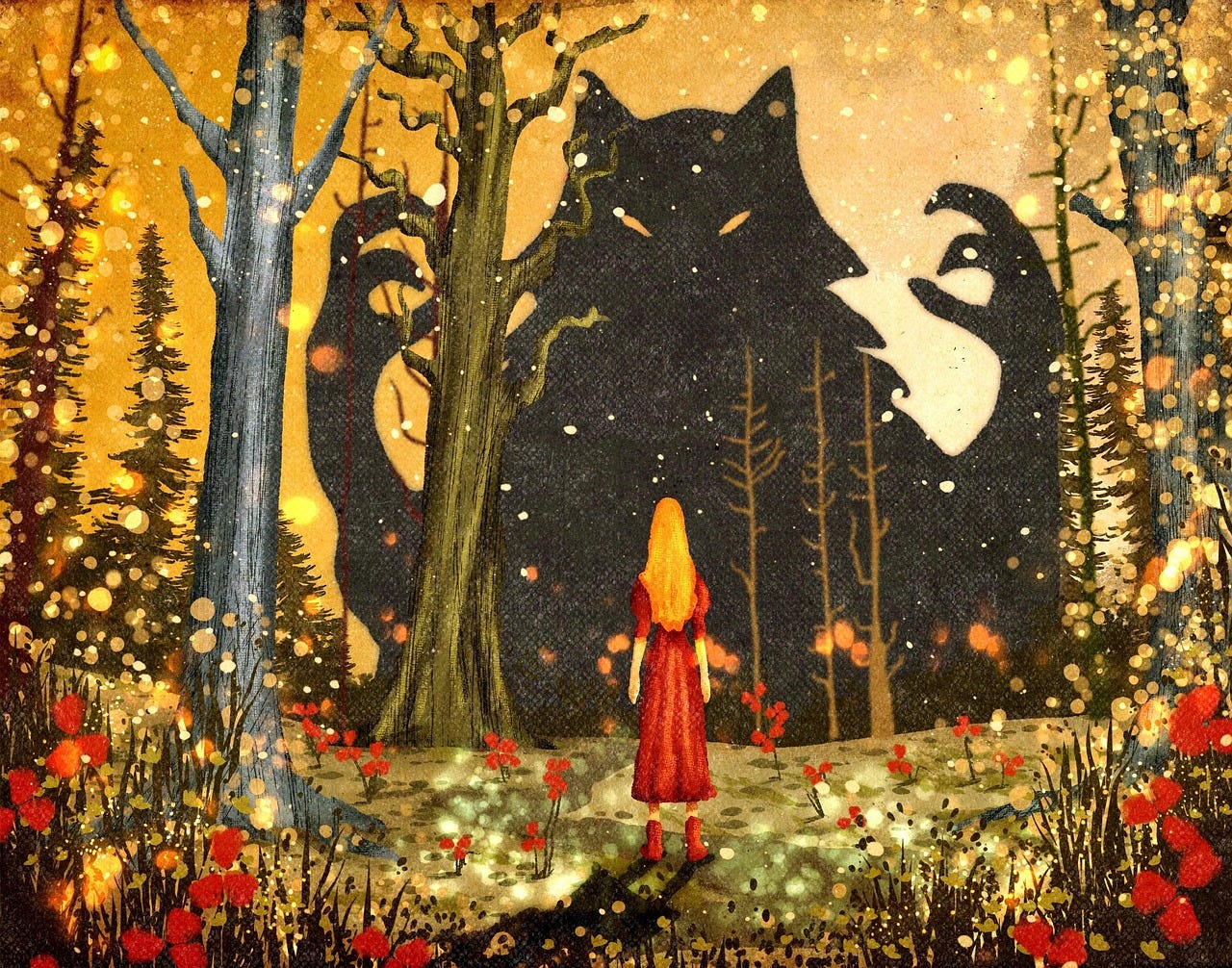
How everyone hated me when I was nine. “When you were a witch.”
That I should be grateful my stepfather had “put a roof over” our heads when he married our mother. “What else would he do?” I asked. “Put us out on the street? Put us in care? I was seven.” She said that I had been an awful child.
“You have no idea what my childhood was like,” I said.
Her view of our stepfather: a saintly man. Full of forbearance, to even tolerate us. Or maybe just me: the blurter of truths that nobody wanted. The scapegoat, the drain for unacceptable feelings. The angry one, when everyone (barring the brother who died) pretended it was all just fine. Just fucking fine.
It wasn’t a joke, that “When you were a witch.” It wasn’t an insult that could have begun with “b”. Because I really was a witch when I was nine. Seemed to me when you’re female, and treated as unimportant, and your voice is silenced or answered with Go to your room! you have to find your power in something. I believed in magic. Not card tricks and swallowing swords, but curses and spells. No way there could be so much folklore and no sound basis. So I studied the stories. The incantations.
It began not under my stepfather’s roof, but my father’s. I was seven, living with mum and dad in Shrub End Road. In the house, which on Sunday mornings smelled of warm baps, Danish Blue cheese, and my mother’s talc. “Ed Stewpot” spooled “Junior Choice” out of the radiogram: children’s requests. Though never mine. In the garden, with its S-shaped lawn, admiral butterflies fluttered around lupins. At night, through the crack in the curtains, the light blue walls in the bedroom I shared with my sister was swept with the headlights of cars.
One day our parents gathered us on the sofa: ten, ten, seven and five. One sat on each arm, and said they were getting divorced. Afterwards, they turned on the TV, and we all watched Tom and Jerry without laughing. Dad moved out that night. And the very next day, my best friend’s dad moved in.
Who I’d never liked. Who was icky around Mum. Who had very strict rules about when we could play on the climbing frame on his manicured lawn with the ugly shrubs all around it. Our feet would damage the turf, he said. What children wanted was never of any importance.
I had no power to stop this double grief: the loss of a father who loved me, and the imposition of a petty man who despised us. My only chance of power was become a witch.
For two years, I made this my truth. I studied the stories. I needed, for a start, a familiar. Sadly, Mum hadn’t replaced the cat that the cattery “lost” while we were away. But the neighbour had a black cat that often visited. Psychically, I made it mine. Mumbled magical words. Walked widdershins. Laid out dishes of watered-down Marvin glue, which looked like milk, but would ‘stick’ the cat to my shadow. I made myself a witch’s broom. Made potions with cobwebs that sagged in the shed where the rabbit’s straw was kept.
And then we were moved to the basement of a house in Beverley Road, and everything got worse, and my spells had to get a lot stronger. I dreamed of running away to live in the hollow of a tree. I’d even located the tree on a Sunday walk. I kept a Tiger’s Eye stone in my pocket. Because I couldn’t object, because I wasn’t allowed to be furious, I wrote and wrote and wrote. This was the little girl that “everyone” hated.
I’ve omitted one small detail about Mary. Three years before she died, Mum had ended their friendship. Over something awful Mary said to her when our Nanna died. I don’t know what, but Mum’s mother was only a few hours dead, and whatever Mary said, it sliced her through. She cried and cried. Some time later, I’d asked, “Will you ever patch it up?” and she said, “You can’t mend broken eggs.” You can’t.
And now this person I had known since I was three had done the same thing to me. Like her speciality was knifing you in the heart if you’d recently lost your mother.
She left, and I made a decision. I banned her from Mum’s funeral. Said to my sister, “You tell her not to come. If I see her face, I’ll leave.”
As you’ll work out from this, I was not healed at this time. I was a mess. I’d not yet found EFT. A year’s counselling at 20 had helped me understand why I was fucked up, but not how to be less so. Eleven years with an abusive man had followed, and he wasn’t very small in my rear-view mirror. If someone hurt me at this time, I was angry, vengeful. And if I had a way to protect myself from injury, I would exercise my power.
The gossip around this event soon got around. My sister’s very social, and lives in the town we grew up in. Mary’s two daughters used to be our best friends. And the degrees of separation in a hometown like that are non-existent.
So perhaps it shouldn’t have been a surprise when Kath, my best friend from sixth form, gave me a ring. She was a carer for Caroline, who had been at sixth form with us, but whom I really hardly knew. Had not seen since eighteen. And Caroline, sharing the gossip, had said,
“You know what Ros is like.”
Six words that contained an entire fiction. Caroline didn’t know what I was like. She’d not seen me for 20 years, and didn’t know me then either. I doubt I spent more than a couple of hours in her company, and not a single minute one to one.
But those stories people have about you, in your heads? They rarely let them go. These stories become their facts. They solidify, set like concrete, and become, in their minds, who you are.
But only days before Mary appeared on my sister’s doorstep, I had learned something very important: we are not powerless against these stories. We can rewrite our stories about ourselves. And by doing so, dissolve even the most cemented of narratives.
Because the last time I spoke to my mother, about three days before she died, I had done just that. Ever since I’d left home at eighteen, I’d had this issue. I’d turn up, after a two-hour drive, a mother of three in her mid-thirties — a professional, accomplished person — and within a few minutes I’d be feeling like a child. I’d crave her approval and attention. Powerlessness and resentment bubbled up. At a distance, on the phone, we’d hold an adult conversation. But in her presence (and in the setting of my childhood home), I would shrink to nine years old. Yes, nine, the age where “everyone” hated me.
Sick of this shit, a month before Mary mentioned “nine”, I’d booked in with the hypnotherapist who’d helped me quit cigarettes with a single session. I said, "Can you stop me turning into a nine-year-old whenever I see my Mum?” She said she could. And what did she help me do, with that valuable hour (that priceless hour, that cost only forty pounds)? She helped me write, for myself, a different story.
I explained I’d been troubled, and trouble, when I was nine. No one knew what to do with me and all my emotions. No one else had problems pretending they were fine. The rest of my family, la-di-dah, all dandy (at least where it counted, in front of my parents). Just me, I was the one who couldn’t pretend. This was literally why my mother sent me to Saturday drama classes. To learn better how to pretend. (I went for five years. I’m good at acting, but still very shit at pretending. Let’s call it what it was, undiagnosed ADHD).
And that hypnotherapist worked an hour-long miracle. At least, that’s how it seemed to me, inexperienced then in the wonders of how you can reshape your whole reality with words. The very gift I’d hoped for as a junior witch, incanting spells? She demonstrated how it was actually done. As a child, I hadn’t understood that the magical words, the ones that create and transform, aren’t found in books. They’re neither in nonsense or Latin. And you don’t need to drop dead animal parts in cauldrons.
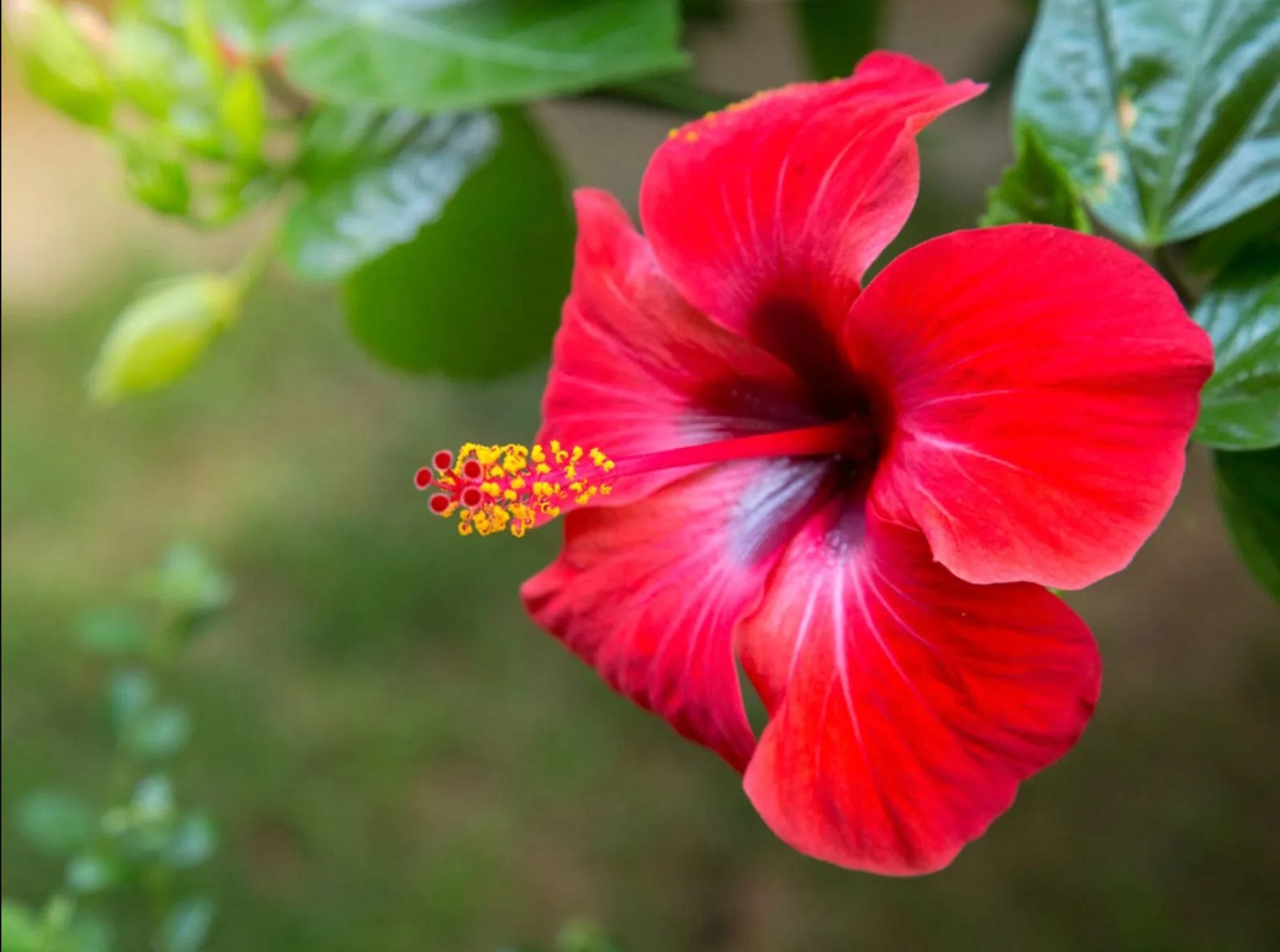
In that hour, she gave me a new story about myself. That I wasn’t this troublesome weed. I was an exotic. A hothouse flower, sensitive to her environment. That I needed warmth and care, but that unlike the native flowers, the dandelions and daisies, I was utterly splendid. That treated with care, I was glorious when I bloomed.
“Can you think of such a flower? she asked.
“Hibiscus.” Which had been such a feature of my time in Costa Rica.
Bright red blousy petals, beefy phallic pistil in unashamed saffron. Glorious. She bathed me (in that relaxed, alpha brain-wave state), in the image of myself as a hibiscus.
“Now whenever you’re about to see your Mum, see and feel it: I’m a hibiscus. And if you start feeling nine in her presence, reconnect with the image.”
And friend, it worked. The next time I saw her, I left my kids in her care before going to an old friend’s wedding. And when I returned, late in the evening, we sat together and talked. And when she brought up something that in the past would have annoyed me and simultaneously made me silent, I said, adult to adult, that things like that had been tough for me, when I was a kid. That the way she always sided with our stepfather made me feel, at the time, that she didn’t love me. And I said it without an edge, without anger or fear, but just as a fact, adult to adult. She didn’t, as she had in past, get defensive or angry. We talked it through, and I said, “That’s okay, I forgive you. It was how I felt then, but I do know now that you loved me. That you were just trying to make things work with a difficult man.” Our first, and as it turned out, only, honest conversation, adult to adult, without rancour, about how it was for me at home when I was nine.
She heard me, and didn’t cry. I bloomed and bloomed. The next day, I packed my kids into the car, and we hugged.
And then, she went on holiday, and died.

Controlling the Narrative
You’ve heard this phrase from politics and PR. Controlling the narrative. Those who control the narrative, who spin the story that others believe, hold the power. So let that person be you.
That final conversation with my mum showed me that I could write a new story about myself so powerful that it actually changed the behaviour of the other person involved. Before I became Hibiscus, I could only replay, in her presence, my internalised version of the nine-year-old everyone hated. Including, and let’s be honest here, my mum. No one likes a child whose barely-capped fury makes you feel like a failure. And the story of that child just kept on running, year after year, like an old, corrupted programme that wouldn’t uninstall. Until the new code overwrote the hard drive. Only then could she see the adult me. Once I installed the new story, it was the only thing she could respond to. You can’t be defensive or angry against a flower.
There’s a power in rewriting your story while those involved in that story are still alive. It gives you the chance to say, without rancour, the things you have wanted to say. It allows you to set things straight. But more than anything, it shows you that you never have to change another person. We can’t. They run their programmes and we run ours. But what’s fascinating is that we only need to change our side of the tale, and the narrative can shift. Sometimes, decisively.
Of course, this is a power to use with care. I do wonder about the timing of Mum’s death. Whether the truths I told her calmly, discussed adult-to-adult, were actually, as she mulled them alone on holiday, more than she could live with. Yes, her death was an accident. But some spiritual folk say “accident” is a myth. I’ve even heard “all deaths are suicides”. And yes, I know if you’ve lost someone close, that sentence will sting you as hard as it stung me, so reject it if you need to. Take only what’s useful.
With greater wisdom— had I not been entirely unhealed, as I was then — I believe I would not have felt the need to “tell my truths”, aware that she might not have the strength to hold them. But I could have benefited hugely from the new story I was beaming out about myself. We might have had years ahead of us, of adult-to-adult conversations, unshadowed by my angry nine-year-old. Lightness, closeness and laughter (my mum had the most hilarious laugh).
If you think you’re ready to rewrite your story, or stories plural — the ones others tell about you, the ones you’ve internalised — I’m including some guidance below the paywall: steps you can take right now, no hypnotherapist required.
Is there a personal block you struggle to move past? Is there a personal relationship that’s causing you grief? Is there a habit you’d like to change? Is there a pattern that keeps coming up for you: losing things, feeling hopeless, meeting people who break your trust? Write yourself a brand new story. Start today.