

So What If We Do Nothing?
"We excuse our sloth under the pretext of difficulty" - Quintillian

Once upon a time, not so many years ago, a girl — a marine biologist — closed her eyes for a moment on the deck of a whale watch ship. They were heading back to port.
Sometimes, I like to feel like the wind is drowning me. Filling me. Consuming me. Pressing me back like an aggressive lover. I’m most alive when I am being whipped about by the ocean’s briny breath, like it’s reminding me of some more ancient version of myself that lived with salt in my blood.
Something extraordinary was about to happen to the girl. She was in the restful, open state that makes such things possible.
Suddenly, I felt a tug in the still waters of my consciousness. I opened my eyes and blinked several times, and some unknown force took me by the chin and turned my head slightly to the right, so that I caught the trailing end of her faint spout on the horizon just before it disappeared.
A mother whale, tangled up in a drift net, with her calf. The girl alerted the ship’s captain, and when they pulled alongside,
She couldn’t open her mouth. The net was wrapped so tightly around her head, her jaw was sealed shut. It had been there so long that parts of it were buried in her skin, which was raw and red and perpetually seeping. One long, white pectoral fin was also immobile, trapped against her side. She had use of her flukes, but three large buoys trailed behind her like an ungainly webbed train, chaining her to the surface.
I want you to read this beautiful, true story by Kendall Lamb, which I’ll link to soon, but please stay with me for a moment.
There are two kinds of doing nothing. There is the pleasurable contentment where Kendall was resting when she felt that tug of awareness. Eyes closed, thoughts stilled, full presence in the moment. This is where the well of creation is accessed, too. Like Kendall, it often reaches me through water: swimming laps, or in the shower, or with my hands in the sink, washing up. Ideas fall into the mind that has fallen quiet. This is where we connect, if we are content, to the greater web of consciousness.
But the second kind of nothing is this: a failure to act. Miss the whale. Too tied up in your troubles or pain to feel the tug. Or by some fluke (apologies, whale pun), see the whale’s spout and reason, Not my problem. Or, I need to get back, I’ve got a dinner reservation (the response of some of the whale watch tourists). Or decide, this is way too difficult. Maybe make a call, then leave it to others, missing the profound, life-illuminating end to this story.
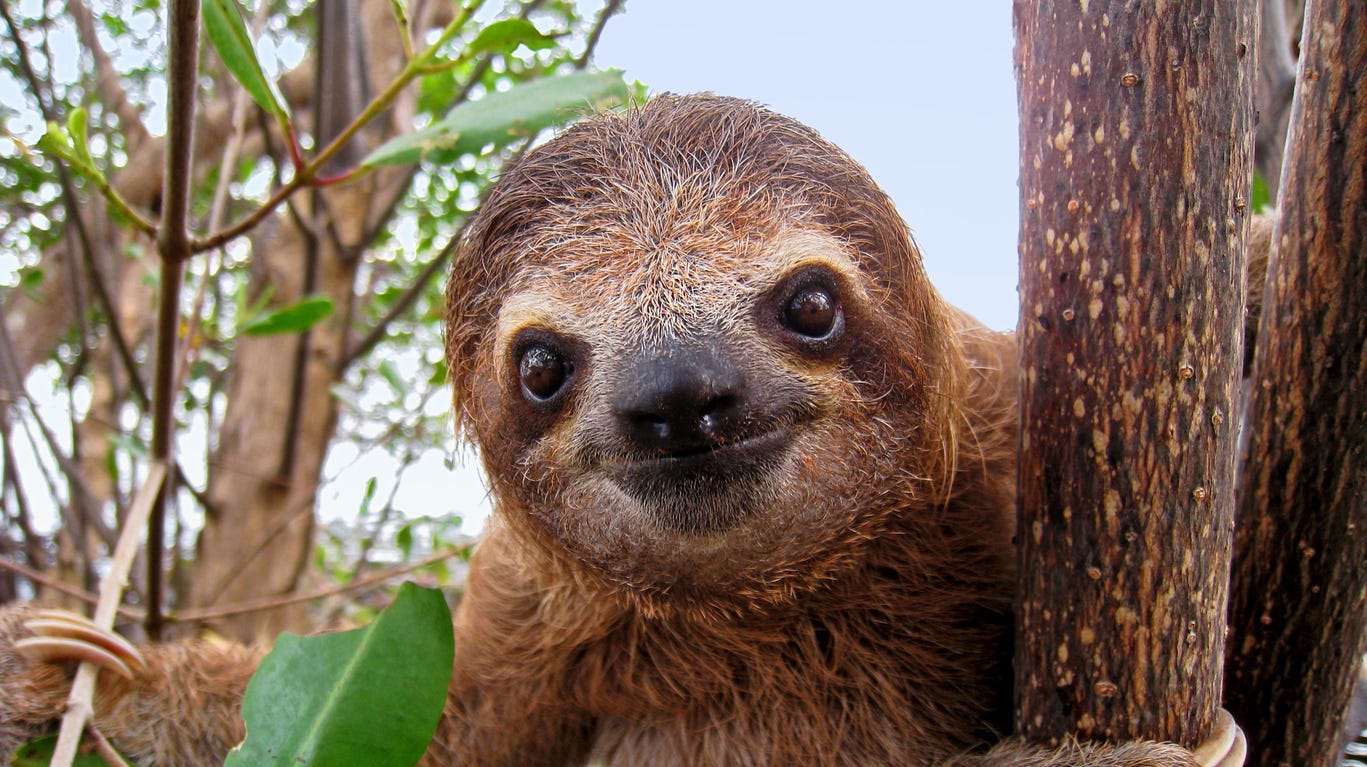
Which explains why the last of the seven deadly sins is sloth.

What is sloth? Doing nothing. Taking no action. Right now, this is the easiest sin of them all. What action can we take when there’s so much in the world to dislike and so little we control?
One vote every four or five years, and you’re stuck with a government decided by frightened, ignorant people or tech billionaires. We can’t force politicians to be humanitarians who value our health over wealth. We can’t single-handedly dismantle capitalism or stop our leaders waging unjust wars.
We watch in dismay as our brother disappears down conspiracy rabbit holes, and someone at coffee tells us Hollywood stars drink blood to stay young. The world has gone exceptionally bonkers.
What can we do but retreat into Netflix? Or online, escape into puppy videos, soothing landscapes, pictures of our breakfast. Sure, there’s marching, or striking, or ranting to our friends, but non of that brings us the changes. So what can we do?
We can manage ourselves. We can heal our wounds. We can change our emotional reactions. Instead of feeling disempowered and enraged, we can turn towards love. It’s the very opposite of what the sociopaths in power hope for from us. They would rather we were maddened to the point of giving up, disempowered by our failing mental and physical health, our redundancy, our desperation to just pay the bills. And yet, if we follow our emotions, all the way to the painful digging-in ropes of the nets we have dragged with us ever since childhood, and cut ourselves free, we become an unstoppable force. They cannot control us, if they can’t control our emotions.

Years ago, things started going very wrong between me and Paul. My Costa Rica romance, my magical, deep-rooted connection with a trusted friend; not even this was a smooth ride. No long-term relationship is. Paul developed a chronic illness. And after a couple of years, being ill made him angry.
Or maybe his unaddressed anger made him ill. This is more the way things work — the powerlessness of being bullied by teenage boys on his estate got triggered when my boys turned into teens. Something of that whiff of testosterone. The outbursts, the slammed doors. I found myself living in a warzone. There was a lot of shouting. Mostly his, but sometimes mine, with tears.
For several years, it was very hard. Searching for any way to get my Costa Rica husband back — since his GP responded with useless shrugs — I haunted the forums and alternative websites. I found this weird “tapping” thing, EFT (Emotional Freedom Technique). It was the summer of 2007, and to make sure I understood it, I tried it on myself.
The relief was immediate. Paul rejected it, but EFT became my go-to. Every painful emotion that arose (and there was one almost daily), I’d take it to a quiet room and tap until it dissolved. And under it, the pains that had been triggered — all the damage done to me as a child.
The changes were rapid. In three months, my children started to notice how calm and stable I was. Paul kept shouting, but I wasn’t shouting back. Calmer and calmer, as piece by piece, I removed all the trigger points. More and more resilient. I could see Paul’s fury at me as nothing to do with me, and everything to do with his little-boy self that got beaten to a pulp by boys on the wasteground.
One day, when he started shouting and I, as usual, excused myself to the brick-floored basement to tap, he followed me. Too much fury to leave it unvented, and it needed an object. Faced with my placid response, he became incensed and, looking for an outlet, began to pull albums off the shelf — the precious punk collection from his youth — and smash them on the floor. And I felt a great wave of love and sadness for him. With tears of compassion, said, “Look at you. Look what you’re doing.” Unable to respond to this, he left the room, still in a rage, and I tapped through my sadness. But the next day, when he’d calmed down, he said, “I keep thinking I’m angry with you, but it can’t be you. No matter what I do, you only respond with love.”
There was more work to be done to heal us — Paul had to find his own therapeutic path. But this was the start.

A stranger sent me a DM this week, and at the end of an energetic paragraph, said, “Humanity has only 50 years left.”
This is a lie.
There has never been this kind of certainty, and if you tap into the deeper sea of consciousness, you will know it for yourself. The doom mongers have always been wrong. Wasn’t it The Rapture on Tuesday? Yep. Again. Yet no one ascended in a beam of light, and the world kept on rattling towards its non-delivered Armageddon.
Maybe there’s a half-truth in that 50 years. Maybe Humanity 1.0, the war-raging, ignorant version of us, has only half a century left before Humanity 2.0 takes over. Because desperate times require strong responses. Just as Neanderthals gave way to Homo Sapiens, under environmental pressures, these dark, mad times can be seen as the crucible driving a new iteration of the species. Let’s call it Homo Consocius, a species of hominid consciously connected to each other in a web of awareness. Unlike an evolution of physical form, an evolution of consciousness happens in an individual’s lifespan. So it’s not impossible that within 50 years, Homo Consocius will become the dominant species.
We must take it on ourselves to do the work. If it hurts, that’s where you start. That’s where the ropes of the net are cutting in. Like the girl who saved a whale, you have to divert your course. Ignore any passengers who grumble. Stay with it, and save this most extraordinary creature. Because too many of us are that creature. Hampered. Dragging weight. Totally snagged in the net of the past. Historical wrong turns still cutting deep into our flesh.
And who will save us? Only ourselves. Sloth won’t cut it. If we’re to evolve as a species, then it happens person by person, each of us sending the strongest signal to the one who can release us (who is also us), to do the patient work, cutting away each rope, each knot, until we are free from the net and are healing from its damage, able at last to dive deep, to return to the surface with speed, to breach, to soar, to splash down with such power that those who witness it find themselves crying with joy, inspired to be alive.

If this piece found you today, notice these words in A Girl Saves A Whale:
I don’t put much stock in random encounters. There is far too much magic animating the world to dismiss these moments as rudderless collisions.
Read Kendall Lamb’s “A Girl Saves A Whale”
This is the last of my posts on the Seven Deadly Sins. Previously:
What I Learned About Lust From a Monk, A Marriage and a Breakdown
Gluttony for Punishment: How three cakes a day saved my sanity
I was Zen, and Now I Want to Punch Someone in the Face [Wrath]
I’m thinking of starting up a monthly EFT tapping circle, where you learn to tap and bring your own emotional issues to the group to get rapid and long-lasting relief. Let me know what you think about this by voting in my poll:
The kindness and goodwill of my paid subscribers helps me to keep my own head above the waterline. (Because whales are mammals, and need to come up for air). In return, below, for paid subscribers only: how to remove all your major trigger points by healing the associated wounds, exactly as I did in 2007.