


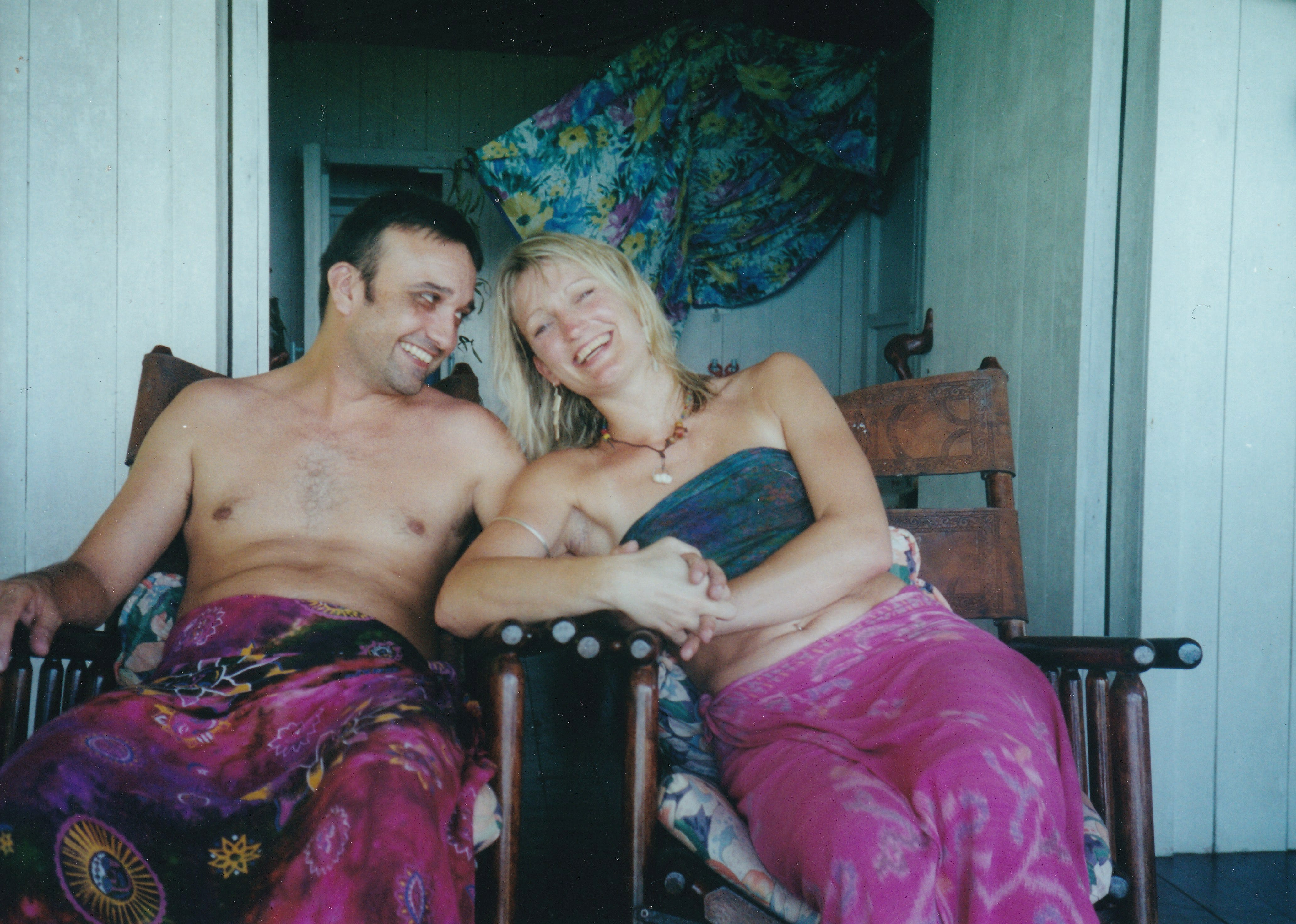
When you do something notable, you get a lot of attention. I like attention. Of course I do; I’m a writer. We yearn to be read.
In fact, we yearn to be loved. As William Nicholson (screenwriter of Gladiator and Shadowlands) said at a boutique lit fest we both spoke at, “All writers want is for Mummy to pat us on the head.”
I was told very early that I was a “show off”. Confident boys get clapped, while the girls get shamed. Mum thought I should “get it out of my system” and sent me to drama classes. Did she hope to make me demure? This brilliant, frustrated scientist with a penchant for showing her nipples? Later, she told me, “You are me writ large.” Gaining attention with poems instead of crocheted tops, but yes.
For five years, from aged nine to a geeky fourteen, I went to Saturday morning drama classes and fantasised about being an actress. But when my final bid for a lead (Abigail in The Crucible, a role close to my heart) fell short, I decided (since bit parts are not very me) I’d rather keep Saturdays free to meet boys.
In the 80s, I was the frontwoman of my own band.
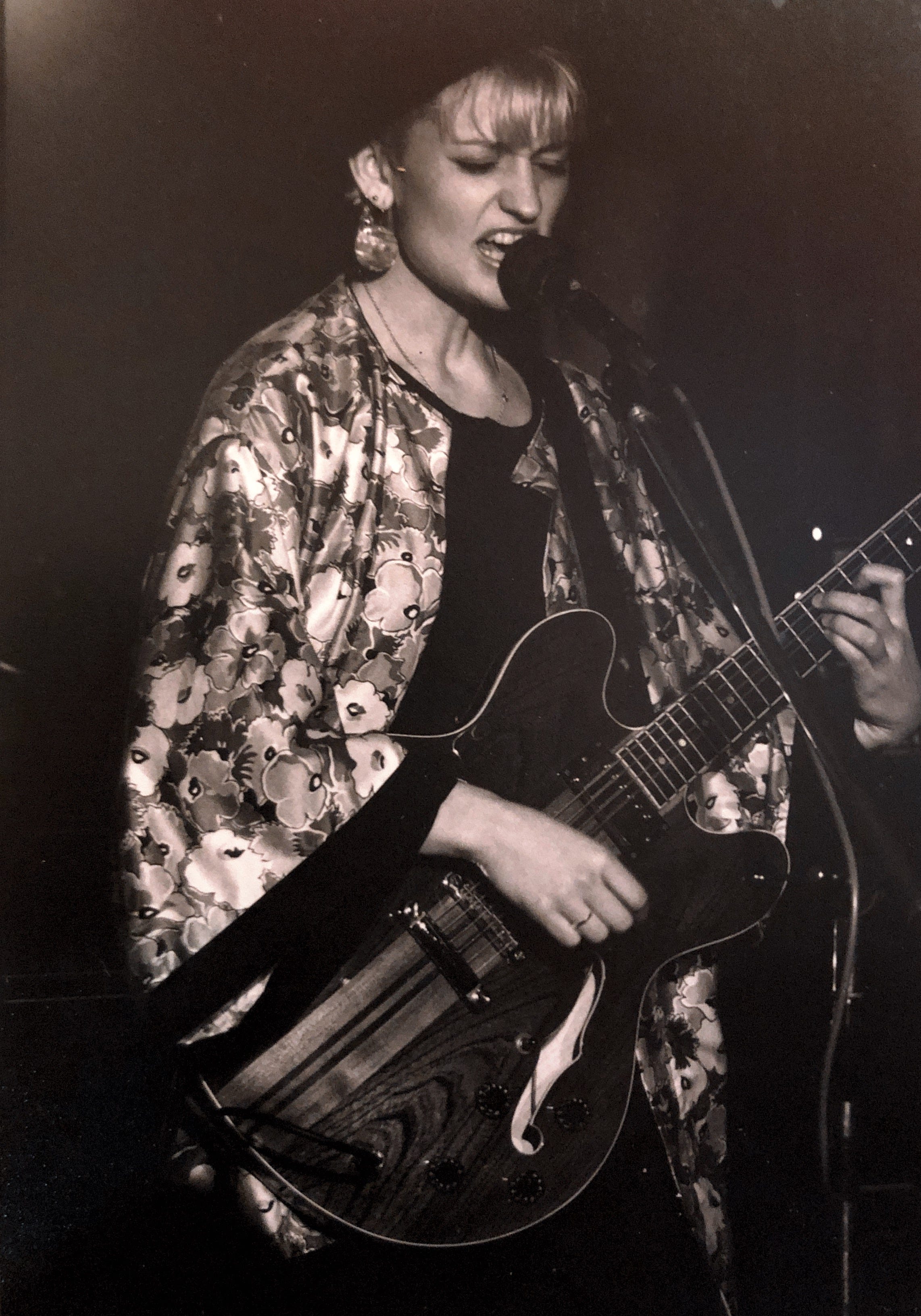
After our breakthrough London gig, I got an offer of management. A weasly man keen to strip me away from the band, with a promise to make me “the next Sade.” While he made my skin crawl. On the cusp of success, I stepped away for this reason: I was a writer. Had known I was a writer since I was four. The band was just a vehicle for my lyrics. A way to be heard. But the music industry? That was throwing a live deer to the lions.
Because we writers want love, and also isolation. Part peacock, part ostrich. Part performer, part monk. Love me, but also, leave me the eff alone so I can write.

I love to answer people’s comments. I want everyone to know that they matter. That I know they’re a real human being, just like me. That I’m not ignoring them. But as the volume increases, my individual answers get shorter. So I’ll answer the ones that need greater length in this post. Chiefly, how I did it: got my piece into Modern Love.
I’m aware that if things keep going well, replies won’t be possible. Because it’s hard when fifty bitty replies remove any chance of a writing morning. I have paid work still to do, and an academic paper, and a book in the pipeline, and these posts to write.
So chat to me while the going’s good. But don’t get weird on me.
Yes, I know, I wrote about sex. But the deeper subject was love. Our yearning for it. Our fear of getting wounded in the search for it. Our fear of even daring to hope. And then how, when you give it up as a quest, it can surprise you. Like a great tease, who was playing with you, and then you turn away and — “Not so fast!” — it grabs you. Finally. The real deal.
When Paul and I dove all the way into love, I realised I’d never experienced love before. Everything I’d thought was love wasn’t. Because this had a whole different flavour. It ran as deep as DNA. I didn’t have to perform for it. To be a version of me. Just me would do.
I hope I’m not performing for your readerly love either. Just emptying my head onto the page and saying Hi. Hello, fellow human. Weird round here, innit. Want a little hope? A little joy? Transformative tales of breakdown and recovery as chainmail against the zeitgeist?
Because I don’t think humanity’s doomed. I think humanity’s having a breakdown. Just like I did, from 1997 through to mid-2000. And those things that seemed so terrible, and took me close to extinction? They’re the very same things that brought me to insights and greater connectedness. And to my mind, this pattern is just playing out in society. “Society” is just individuals, after all.
So for me, allowing we can ride through this, humanity will end up wiser, more evolved. Yes, we have echoes of the 1930s, but this isn’t a circle. This is an upward spiral. We’re doing fascism and genocide big-time (again!), but this time, there’s a greater proportion of us connected to love. I am sure we will win through. Our job, those of us who care about love, is to keep adding weight to the positive side of the scale.
And I think this is why “We’re just here for the sex, please” has touched so many hearts. Why it’s brought more than five hundred new subscribers to How to Evolve, and so many personal messages too. Because we need hope. When it looks hopeless, we need to believe that love and human connection can bloom in the darkness.
And it can.

So maybe the first answer to how my “how we got together” story get into print in the New York Times is “appeal to some need in the Zeitgeist”. But what, beyond that?
Rehearsals
It’s a long-practised story. One I’ve loved to surprise people with (over coffee, over wine) for more than two decades. So it’s not just that I’ve practised writing, clocked my 10,000 hours (and then some). I’ve told this story over and over again. I know its salient elements. Exactly how to deliver the twist. The points where people laugh. The point where it might bring a tear to the eye.
I took my time
The written version took me quite a few hours, over six months. I dropped it for weeks at a time, before returning to tweak what I had and write another section. This was the story (of all my stories) that feels like it matters the most, and I had to get it right. But in truth, it didn’t take six months. It took twenty-four years.
The written version has a lot more detail than the oral one. In writing it, for the first time, it shifted. I learned new things.
How symbolically important the house was, with its permeable boundaries. We went there with our window glass in, hermetically sealed from each other. The house knocked it out.
Writing is always like this. A process of discovery. Stories I’ve told orally for years reveal fresh insights when I write them. For example, another favourite oral story, the Penis in the Pate: until I wrote it, I’d never before connected mum’s nudism to her anecdote about crying on the tube when she read The Naked Ape. So obvious now!
This is why anyone who uses generative AI to write for them is learning nothing. They’re missing the insights, with all their potential for healing. They’re learning to be less capable; to cover up and cheat, rather than learning the magical craft of writing. And that’s a great shame.
I got diverted and rerouted
This is fun, because I think of this now as “delivering the piece with perfect timing for its happy landing”. But at the time, it felt like something I was failing to complete. It was on my To Do list for months with an embarrassing cross against its completion, week after week.
I started writing it as a normal Substack post. But I was only a paragraph in when I thought, No, this is bigger. I should send it somewhere special.
I was initially targeting an essay competition (including personal essays) that closed at the end of January. It wasn’t coming easily. In the end, there was one day to the deadline. I meditated with the question of whether to press it to completion, and the answer was No.
A couple of months later, it was lying fallow when I decided I would take what I had (1700 words) and send this opening pitch to The Guardian’s Long Reads, with an idea of expanding it. They said Not for us but suggested I send it, instead, to the editor of the Weekend section.
But I didn’t follow through. Again, I let it lie fallow. Plenty of other things to be working on. There was some resistance, and I pay attention to resistance. I consider it meaningful. If the inspiration isn’t there, if the energy isn’t behind an action, it’s rarely a good idea to push through (with the exception of taxes).
A small paid job
Then, in late May, a How to Evolve subscriber asked me if I do editing work. They wanted to submit to the Modern Love column and wanted an outside eye. I knew about the column. I said yes, this was something I could help with.
In order to do the best job possible, I did some research. Not only reading about a dozen Modern Love stories, but also reading submission advice.
And because AI is good at analysing patterns, I also uploaded a whole bunch of stories to Claude and asked for an analysis of them, plus reliable sources on Modern Love submission success (with links so I could double check because Claude lies like all LLMs1 do). What I’ve got in return is at the bottom of this page, and it was really helpful in informing me, so I could better help the person who had asked for my editorial advice. You need to know what a specific outlet prefers.
And as I started doing this work, I also realised that Modern Love was a perfect fit for my Costa Rica story. And as if it were destiny, I already had 1700 words, and 1700 words was what the editor prefers.2
The main changes I made? Cutting down my paragraphs so they were all 2-3 sentences long. And adding a little more detail to the revelation’s immediate aftermath, since my original plan had been to extend this piece, not end it.
And of course, add an ending. I hadn’t written an ending. I tried a few versions, and landed on a couple of sentences that I thought would clinch it. (I will add, these got slightly altered by the editor after acceptance, though the final words are as submitted).
Submission
The guidelines that Claude had drawn up suggested a very minimal cover letter. In fact, one sentence, such as the ultra bland and slightly needy, "I wrote this essay with your column in mind. I hope you enjoy it."
I decided to go ultra-minimal. Let the writing do the work. Pure title and story.
A couple of days ago, someone messaged me to say they had a Modern Love story themselves and were looking for the contact details of an editor. I said, “Sure, I can do this kind of thing. What’s your budget?” But that was a misunderstanding. It turns out they were looking for a way to skip the slush pile. My answer:
One thing I've learned about writing and submissions over a thirty-year period is that if there is a prescribed submission process, one should always follow it to the letter. Absolutely to the letter, no exceptions. And the New York Times makes it very clear what that submission process is. They get so many submissions to Modern Love (8,000 a year) that there is NO WAY they want anyone trying to get in the side door. That is just a nuisance to them and would be a black mark against your name. Do what they ask. To the letter. That's what I did. And if you want a top tip, make sure you have a really strong, intriguing title (it isn't the title you'll end up with in the NYT: they decide that) and have that as the email header. Just title in the email header, text of the piece in the email, Word document version of the piece attached. Nothing else. No pitch. No bio. Nothing. Do that.
The title
Of course, they change the title 99% of the time, that’s how it goes in any mainstream outlet. You give it a title, they give it another. But your title has to grab them. I chose a title that was based on the title of my most successful piece here on Substack: No one Knew I Was in an Abusive Marriage. Including Me.
My title was I Went to Costa Rica for Sex. I Came Back With a Husband.
The editor says it was the title that leapt out at him in his inbox. Got him to open it. That’s what you want, of course.
Titles are vital, as I used to say to my students, when I used to have students. One student who came to my monthly London poetry group for years wrote brilliant poems with very bland titles. I got into the habit of saying to her that her titles were “beige”.
My question was always, “If you saw that in the index of a poetry book, would you turn to that page? Would you turn to the poem called 'Leaves' or 'Clearing’ or whatever? No.”
So this was my title. Yes, it gives away the ending. Yes, the editor was absolutely right to ditch that and make sure the reader got a lovely surprise. But it got his attention. And as I said at the beginning, that is all writers really want.

Oh, there’s one more thing. Something I forgot to mention, regarding the writing process.
I forgot about the “characters”
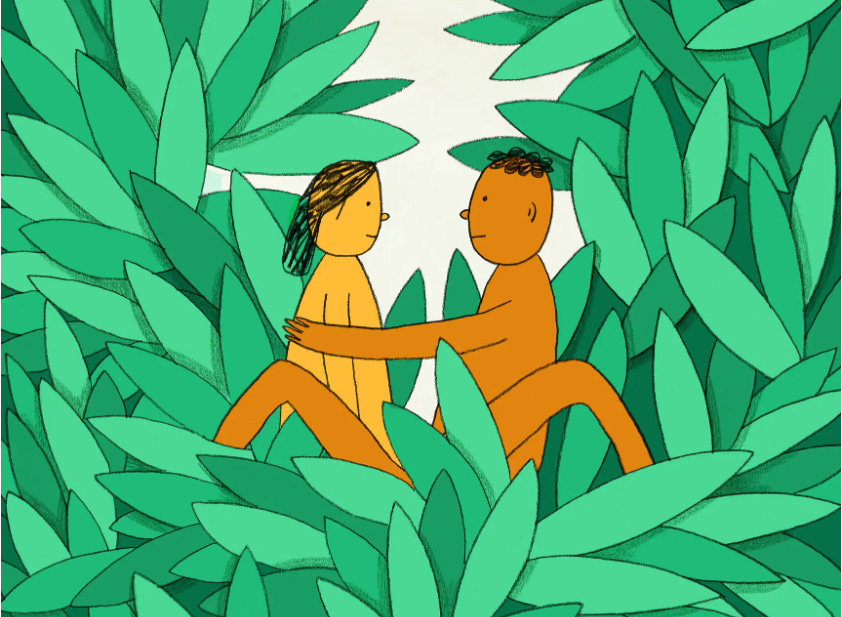
This, of course, is terribly important. My husband? No, though he features very helpfully, I didn’t consider his perspective. This was all about mine. (Result: see last week’s post!). My ex, whose role in my pre-Paul misery was utterly excised by the editor of the Modern Love column post-acceptance, I forgot about him, too. If I didn’t, I’d be horribly gagged. My grown offspring? What do you think? Out of sight, out of mind. Until the morning of publication, when I posted a link to the article to the family chat. And made a comment on the not-previously-seen illustration. My daughter’s reply was golden.
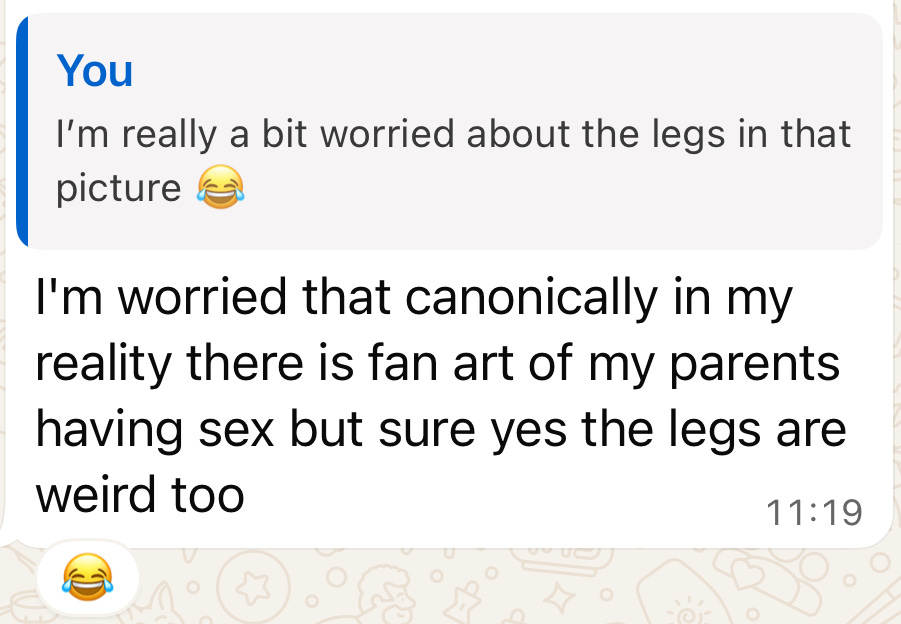
Oh my, I love that girl!

If you also love that girl, or if you’ve come this far, then let us know with a like. Light up the heart! It lights up this writer’s heart too! Like magic! Give it a go!