

Wavy Line Cornflakes Taught Me I was Worthless. I was a Grade A Student.
Deleting childhood malware

Here’s the deal.
I tell you my tale of woe, throw in a few jokes, make you laugh, cry or gasp, and you send me some love in any form you can manage.
Sorry, I don’t make the rules.
“Why does it feel like I’m playing life in Hard Mode?” my son asked recently.
Same, I thought. But I think I know the answer.
He and I were conceived inside depressed mothers. Thanks to being stuck in an abusive marriage, I cried every day while pregnant with him. My mother, deeply disappointed by her affection-free life, was similarly miserable while pregnant with me, and tried to abort me by drinking neat gin.
Being bathed for nine months in your mother’s tears does something to a person. One of the things it does is hardwire your brain for ADHD (receipts here1). Nature is nothing if not adaptive: if you’re born to a mother who’s ambivalent about your existence, it’s helpful to have your circuitry wired for survival. Hyper-distractibility is a form of hyper-vigilance; constantly scanning your environment for opportunity or threat. The flip-side, hyperfocus? When you might have to fend for yourself, you’re going to need it. Can’t be lackadaisical chasing your next meal — the deer in the jungle2 — when you might, at any moment, be abandoned like Mowgli.
So let’s say I had a substrate, different from my siblings, on which the rest of my experiences were built. A heightened sensitivity to rejection and a lot of first-hand experience of it, due to all the reasons that ADHD kids are annoying: impulsive, chaotic, messy, tuning out when people are speaking, forgetting stuff and leaving things half done, and the key one, no filter — speaking your mind, directly, unaware of how your words will land.
I would have done better — a whole lot better — if I’d ever felt loved as a child. But love was for other people. I was clearly faulty. That was the baseline. Then, when I was eight, Wavy Line Cornflakes moved in.

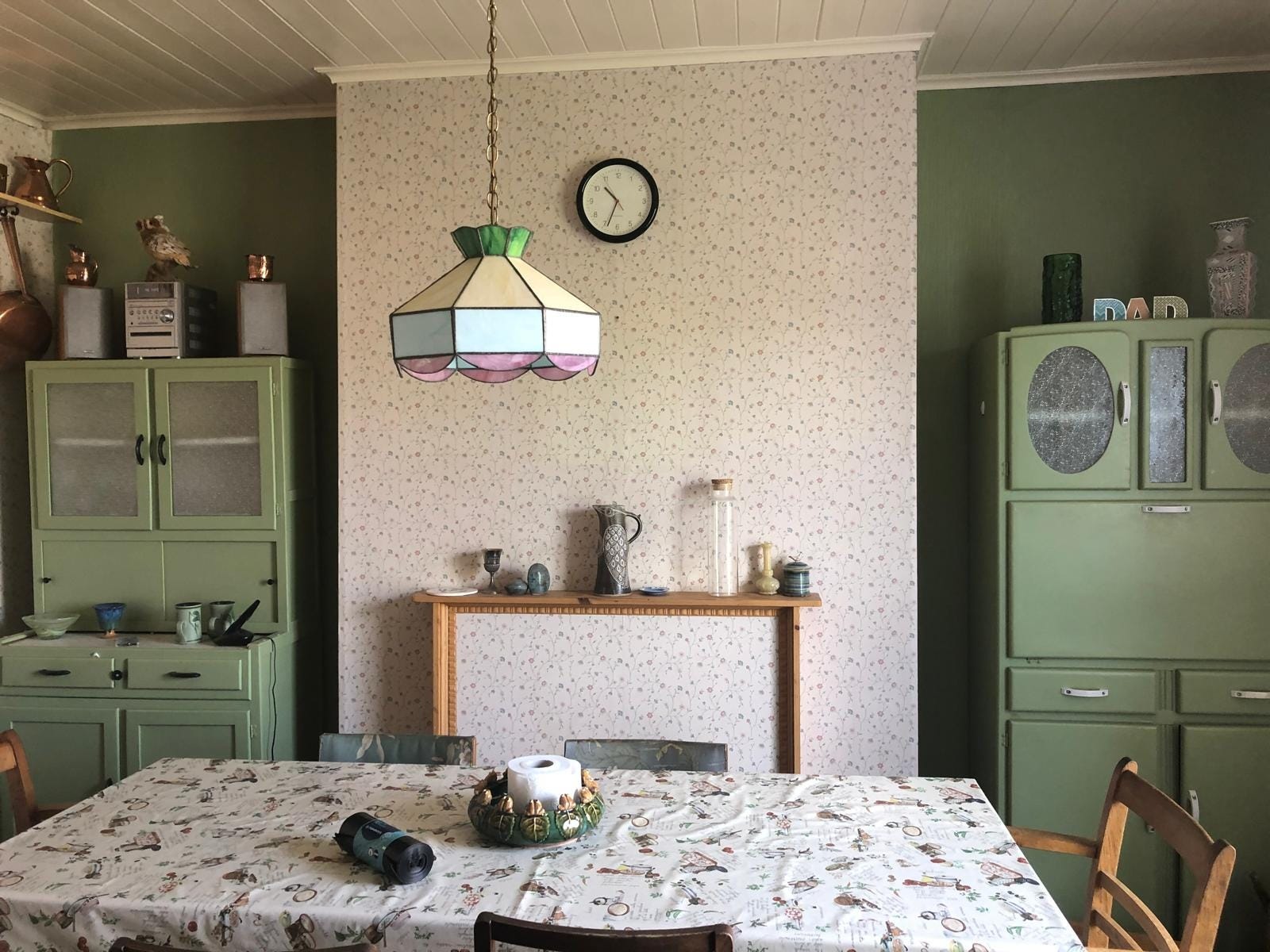
This was not my nickname for our stepfather, but Wavy Line cornflakes were the result, after a fashion. Living with him ushered in a regime that I came to call Food Apartheid (I was a child of the seventies; apartheid was on the news every night, and it was the only word I had for a system where one group ate well and the other didn't). The adults had good food. We had cheap food. My stepfather had Kellogg’s cornflakes. We had ‘Wavy Line’ (the cheapest brand from the Spar).3 My stepfather had Kerrygold butter. We had one-litre tubs of cooking margarine from the Cash n’ Carry that smelled like engine oil. My stepfather had gold-top milk (creamy). We had silver top.
And so it went on. We had bread and jam for tea most nights of the week for ten years; he and my mother, separately, ate quality food (steak, salmon and veg) a little later. The only time we had better food (though mostly, it was still bread and jam) was on Tuesdays and Saturdays, when my stepsisters came to tea.
I’ll be clear: this was done to all four of us, and the three of us who survived our childhoods came through with various dents in our psyches. I can’t speak for the others, but in my case, the malware installed in the vulnerable operating system of my ADHD, the chief ‘dent,’ was severely sub-optimal self-esteem.
I knew this was a weakness, so I daren’t let anyone know. I faked self-esteem (and was called ‘aloof’). I faked self-belief (and was called ‘arrogant’). Fully believing I was born to be a writer of note, I wrote a poem every day for five years, from the age of 13. I hyper-focused my way into prizes and accolades. Built a tremendous carapace of ‘worth’ around myself, constructed of achievements: Grade A exams, a first-class honours degree in science, and a high-paying programming job at which I excelled. ‘Look at me! I have value!’ was the game.
But beneath it, the whisper that any good predator could sense. The ‘sorries’ that fell out of my mouth like confetti. The ‘bad childhood’ stories I told for entertainment when drunk. Predatory men love a trophy-type woman who’s been told for many years she’s both too much and not enough. And pretty soon, I was in the hands of an expert manipulator, who insisted, when he abused me, that my tears were manipulating him.

Many years have passed since my escape and recovery. And nineteen next month since I started clearing the effects of emotional abuse using EFT tapping. Yet still, despite enormous progress, there’s this niggling doubt about my own worth that began in the womb and was set in the concrete of resentfully digested Wavy Line cornflakes. No one would know it’s there because I’m still an ace at faking full brilliance, still terrified people will see the carapace cracks. My armour of achievements is considerable now: an award-winning novel, newspaper bylines, poetry on the syllabus, and for ten years a senior post at the UK’s top creative university.
But Life has decided it’s time I take the carapace off. It has done that by removing me from my much loved and financially secure job, and shredding everyone’s brain with short-form reels, which smashed up book sales, and along with AI, has turned the world into a place where the skills I’ve spent a lifetime developing are no longer required (content warning if you write literary fiction, don’t read this, it will ruin your week).
Layer by layer, the things I have used to persuade myself I have value have been removed. They’re all history now, and sometimes it feels like the world is telling me, so am I.
As I once again ‘pivot’ (how many times? when will it end?), seeking ways to raise my profile and shore up my income, I'm once again thrown into facing the confidence gap I’ve lived with for decades. Naturally, I’ve been using EFT tapping to dig out its roots. And what did I find, yet again, but ten years at that table.
This statement had a real emotional kick:
Even though I learned at the dinner table that the good things go to other people, not me, I deeply and completely love and accept myself.
You know what kills me with this one? I’ve proved it false over and over again. Good things have come to me many, many times. I’m surrounded by the palpable results of all those good things. But childhood malware doesn’t care about facts.
You deleted it before, and thought you got it all, but it replicated itself, as good viruses do, and lay dormant, deep in your operating system. It only takes you opening a crisis file (redundancy, or a book that dies on submission) for the thing to reboot and start running in the background again. So quiet, you don’t even notice. You’re just wondering why it’s so hard to get your arse to the desk.
Delete, delete, delete.
This belief was created by a fucked up man and a woman on a budget. Two people who were kids in the middle of a war where bombs were literally falling on their houses, so we — in their eyes — were blessed beyond belief. He was insecure because he’d had so little as a kid, so he guarded his wealth like Smaug the dragon on his hoard of gold; he refused to support another man’s kids. Mum had her finances totally separate, feeding and clothing her kids on a very tight budget. That was the reason for the system that wreaked so much psychological havoc on me. It was all down to money. And if only I’d known at the time, and not had to work it out for myself; the realisation didn’t land until after her death, when I was 38.
This is why I believe in complete openness with children. Why being open with them is a cardinal rule. When they were small, if I lost my temper, I’d apologise as soon as I was calm, and explain what stressed me, and that it wasn’t their fault. When I had to say no to three fancy ice creams, I explained that I only had a ten pound note left for the week, and that was their dinner money. So none of them went into the world believing, as far as I know, that they were worth less than other people. Amazing how much less damage you do when you don’t keep secrets.
Life, I guess you’re right. It makes no sense, as a person who is open in principle, to keep this damn carapace on.

In a couple of weeks, for paid subscribers, I'll share the full tapping sequence I'm using to dig this one out — set-up statements and all.
or if you’d rather,

Join our community read of Why I Stole Your Life, the epic 18th-century adventure of the real-life soldier and pirate Mary Read


Mary Read’s half-brother, Mark, is missing. With their mother on a mission to extract money from Mark’s grandmother, the wealthy widow Mrs Read, Mary and her Ma set off for London, with Mary disguised as a boy.
Join the story, or catch up, with these chapters:

Talk to me
I read and appreciate every comment, and when I can, I’ll reply.
Biruk Shalmeno Tusa, Rosa Alati, Getinet Ayano, Kim Betts, Adisu Birhanu Weldesenbet, Berihun Dachew, ‘The risk of attention deficit hyperactivity disorder symptoms in offspring of mothers with perinatal depression: A systematic review and meta-analysis,’ Asian Journal of Psychiatry, Volume 102, 2024, https://doi.org/10.1016/j.ajp.2024.104261.
Twenty-one observational studies, comprising 796,157 mother-offspring pairs, were included in the final analysis. Their meta-analysis found a 67 % (OR = 1.67, 95 % CI = 1.35–2.00) increased risk of ADHD symptoms in the offspring of mothers experiencing antenatal depression, respectively.
Yes, there are deer in jungles. If you doubt me, the muntjac would like a word.
I looked up ‘Wavy Line’ for this piece and discovered it was the brand created by the UK’s small shopkeepers coming together, trying to stem the threat of supermarkets. So my mum wasn’t just being budget-conscious, she was being a good leftie. https://www.oxfordmail.co.uk/news/3852207.standing-wavy-line/
Beautiful writing, Ros. I was immediately drawn in and could visualize this story unfold in my mind’s eye. Thank you for sharing this story which has multiple important points, well conveyed. The two points that really struck home with me is how the depression of an expectant mother impacts the experience of the unborn and the child. I was also really moved by the honesty of explaining to children the actual (non hyperbole) facts about how much money is available at a given time and what it is already earmarked for. Thank you for sharing this with us. Very moving all the way around.
My mom has always been depressed and so have I. I feel like I’m constantly playing life on hard mode and it sucks. Thanks for this.